From The Rabbi’s Study…Shabbat, January 2, 3, 2026/13, 14 Tevet 5786
May everyone have A Happy and healthy Secular New Year
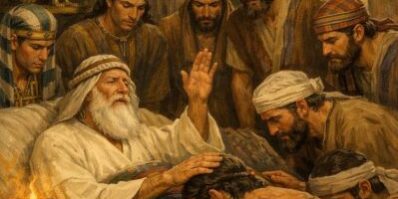
The Torah continues with the last years and death of Jacob. Jacob blesses all his sons (note that his only daughter, Dinah, was not given a blessing). Joseph reassures his brothers that they will be safe and promises to care for them and their families. Joseph died at the age of 110 (note that Joseph did not live to 120 because each time his brothers stated to him, “your father your servant” twice, Joseph did not correct them. G-d took 5 years off each time Joseph did not correct them; honor your father and mother). Joseph instructs his family before he dies to return his bones to the Holy Land. Spoiler Alert! Joseph’s body is returned 400 years later to be buried in the Cave in Hebron with the Patriarchs and Matriarchs – except Rachel, who was buried on the road to Jerusalem.
The Book of Bereshit/Genesis is now finished:
1534 verses, 43 chapters, 12 Sidrot
Judaic Concepts and Values:
Burial and mourning customs, and Family Blessings
Mitzvah: Burial of the dead.
The Connection of Torah and Haftarah: (During the dark times when our ancestors could not study from the Torah or practice Judaism, they read from the Nev’vim/Prophets that had similar moments).
The Haftarah has David, feeling that his life is nearing the end, giving his son Solomon the best blessings in words which point the way of life for every child of Israel. He says, “be strong, and show yourself a man. Keep the charge of G-d, to walk in G-d’s ways and keep the statutes and commandments” (I Kings 2:2-3).
David has been ruler for some forty years (1000-960 B.C.E.). His life has seen many accomplishments, including the crowning of Jerusalem as the capital of Israel. Now, as David lies dying and bids farewell to his son Solomon, his successor, he has many fears. He knows that others will oppose Solomon, supporting another heir to the throne, and therefore warns Solomon about them.
The beautiful Jewish custom in ancient times was to give advice to the sons, which later became writing an ethical will. Grandparents would write letters to their grandchildren expressing their hopes for the future and values they bequeathed to their descendants. In both the Torah and Haftarah this custom appears to be the successor to the giving of advice by the one about to die to one’s sons, as in the instances of Jacob and King David.
As the Secular year comes to an end, just like day follows day, night follows night, each of us age and mature, which follows our youth. We once again think back over the days and those truly special moments. Just like our ancestors did from wandering through the desert for forty years, one day followed another, a routine, but there were also special times.
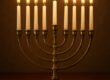
Rabbi Simeon ben Gamliel taught in Pirkay Avot (1:17): “Not learning but action is the principal thing.” During Hanukkah we remember the Maccabean victory and their will to fight for freedom; their rededication of the Temple to G-d and the Torah come to mind. Today, the Jewish people know that we are living in a time large with challenges and perplexities. Difficult are the decisions and choices we are called upon to make, along with a myriad of obligations that rest upon us.
Yet each of the ordinary days ARE important, for our ancestors as for us, because their journey throughout their travels inspired strengthening of their love for, and understanding of, G-d. Just as they became a nation in the wilderness, we here in North America and Southern Utah have become a community of active Jewish people.
For our ancestors as for us, the days of new beginnings were truly special, transforming the wilderness into a garden of memorable days. At this time of year, we offer thanks to G-d for the new births, new weddings, celebrating our holidays, studying together, worshipping together, and entering a new modern year with hope for a world full of the LIGHTS from Hanukkah to spread throughout the darkness and obtain SHALOM/PEACE!
New Year’s Day I will be offering a prayer at “Prayer Over the City” in St. George at the tabernacle on Main Street, which starts at noon. Get there early to join the St. George Interfaith Council and the Community celebrating a Blessed New Year!
Shabbat Shalom,
Rabbi Helene Ainbinder