From The Rabbi’s Study…Shabbat, January 16,17, 2026/ 27,28 Tevet 5786
The Torah continues with G-d telling Moses to go before the Pharaoh and ask him to let the Israelites leave Egypt. Moses responds that Pharaoh will not listen and apologetically explains that, because of his speech impediment, he is not the right person to represent the Jewish people. G-d answers that Moses’ brother Aaron will accompany him as spokesman. Aaron and Moses appear before Pharaoh to request freedom for the Israelites. Pharaoh refuses, and seven of the ten plagues are set upon Egypt. Pharaoh remains stubborn and will not let the Israelites go.
Judaism Concepts and Values are Go’el/Redeemer, Morashah/Heritage, and Hardening of the heart.
In ancient times the duty of the kinsman was to provide ransom or exact vengeance for lives or property of members of his family. G-d promises to act as the redeemer of the children of Israel, intervening to free them from Egyptian slavery (Exodus 6:6).
Next is the Heritage of G-d promising the land of Canaan to the children of Israel (Exodus 6:8). Keep in mind that a “Heritage” may be spiritual, remaining in the recipient’s possession regardless of his actions. Judaism has an example in the Torah that states that this heritage (the land of Canaan) will belong to the Jewish people forever. However, the land of Canaan is a material heritage, conditional on the conduct of the children of Israel.
The rabbis point out the phrase “hardening of the heart” occurs 19 times in the story of Pharaoh and the Israelites. It is recorded ten times that Pharaoh hardened his heart, and nine times that G-d caused Pharaoh’s stubbornness.
The Questions are:
Is it fair play by G-d to harden Pharaoh’s heart and then every time change his mind and punish him with a new plague?
How can G-d make it impossible for a person to obey and then punish the person for disobeying?
Some answers from the sages explain that first Pharaoh’s stubbornness caused him to vacillate. Eventually, Pharaoh was conditioned by his stubbornness, and it appeared as if G-d Himself had caused it. Judaism affirms the principle of free will. Everyone is a master of their own choices and spirits.
“One evil deed leads to another” (Pirke Avot 4:2). If one chooses to do evil, it will, like Pharaoh, continue to enslave that person. Conversely, one good deed leads to another, and each of us are that much more liberated from slavery.
How many know that seven is the most important number in the Torah?
Try to remember some of G-d’s seven promises.
Since this Torah portion is from the Book of Exodus – yes, you may look into a Haggadah from Passover.
This is one taken from (Exodus 6:6) “I will redeem you with an outstretched arm and through extraordinary chastisements.”
The Four cups of wine.
“I will Free you…”
“I will deliver you…”
“I will redeem you…”
“I will take you to be My people…”
Wait for it…THREE More!
“I will be Your G-d…”
“I will bring you into the land…”
“I will give it to you for a possession…”
I believe at the seder 4 cups of will is enough.
Extraordinary notes.
How many realize that our G-d was introduced in the Torah as the first G-d in history to have been above and beyond nature. While you continue to read Exodus, the Egyptians had men that would call upon their deities, and magic. Moses and Aaron followed G-d’s instructions, especially at the beginning with the “Staff/rod”, which Moses used many times.
Can you name the one instruction from G-d that was NOT followed by Moses?
A Hint: It was the reason he was not allowed to enter the Holy Land.
How did Moses and Aaron just appear in the court of Pharaoh without following protocols?
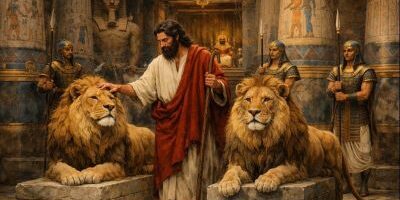
The guards at the gates of Pharaoh’s palace were lions, however they were Moses’ pets when he was a prince in Egypt!
Shabbat Shalom,
Rabbi Helene Ainbinder