From The rabbi’s Study…Shabbat, January 9, 10, 2026/20, 21 Tevet 5786
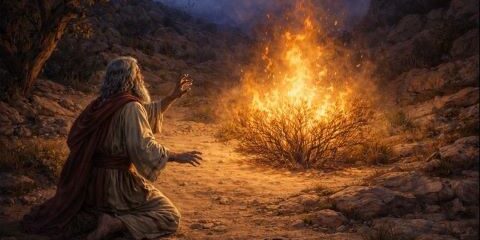
The Torah continues with the beginning of the Book of Exodus. A new Pharaoh comes into power who orders the Israelite male children drowned. Baby Moses was placed into a basket and set afloat in the Nile River. Moses is saved by the Pharaoh’s daughter, Bithia (a remarkable woman that broke from idol worship and realized the Divine plan when she saved the rescuer of Israel; she was saved from the plague by Moses). Moses kills an Egyptian soldier fighting with an Israelite slave and flees for his life to Midian. G-d speaks to Moses out of a burning bush and tells him that he and his brother Aaron will liberate the Israelites from Egyptian slavery.
Judaic Concepts and Values:
Justified civil disobedience, G-d is conceived by each generation in a different way, the importance of humility, and Chinam Shinnat /gratuitous hatred.
In Judaism, humility is a virtue to be admired. When Moses is called by G-d to return to Egypt to lead the Jewish people to freedom, his first response is a question: “Who am I that I should go to Pharaoh and free the Israelites from Egypt?” Many commentators have argued that Moses was showing humility when he asked this question, perhaps even fearing that he did not possess the political skills to liberate the people from Egypt. As Rabbi Eleazer be Yehudah once said, “No crown carries such royalty as that of humility.” Also, the prophet Micah said that what G-d requires of us is to do right, love goodness, and walk humbly with G-d (Micah:6:8).
Sinnat Chinnam: gracious hatred by large is described as Jewish law denouncing hatred. “What is hateful to you, do not do to others,” state the rabbis (Talmud Shabbat 31a). Gratuitous hatred, or hatred without real cause, was considered to be especially vicious. The opening of this Sabbath Torah portion opens with the Pharaoh expressing his disdain for the Israelites. He condemns them for increasing in numbers (Exodus 1:9). For this “crime” he has decided to obliterate all of the Israelites.
Notes of information: The Story of Exodus takes place 400 years after the death of Joseph and this Pharaoh (Ramses II) did NOT remember what Joseph did to help save the Egyptians. Also, the Israelites were numerous and still a tribal community. The Pharaoh feared the Israelites would raise their army against Egypt. Ancient time Israelites and even modern time Jews offer peace before taking the action of going to war. Ancient Israelites were agriculture communities, and in modern times Israel created the drip systems to water crops in the desert (Epcot in Disney World showed this method in the early 1970s).
Haftarah Connection:
The prophet Isaiah era extended for close to forty years, from 740 to 701 B.C.E. During this time, Assyria grew into a world power. The kingdoms of Syria and Israel fell before the Assyrians in 721 B.C.E. The kingdom of Judah became the sole representative of the true religion.
Isaiah comforts the Israelites by telling them there will be a better future for them, if they follow Judaism. Isaiah criticizes the Northern Kingdom for leading lives of dishonesty. Yet, the Haftarah concludes with his words of comfort and says that G-d will remember his covenant and promises made centuries ago to Abraham, Issac, and Jacob.
The connection links the suffering in Egypt and the time of Isaiah.
May we see the day arrive, that the hatred toward the Jewish people and others ends.
May the world strive for freedom and peace always.
With Torah Blessings and Shabbat Shalom,
Rabbi Helene Ainbinder