From The Rabbi’s Study…January 23, 24, 2026/5, 6 Shevat 5786
The Torah portion continues with Moses and Aaron persisting to plead with Pharaoh to let the Israelites go free. Pharaoh continues to refuse and the Egyptians are punished with the last three of the Ten Plagues, which are locusts, darkness, and the death of the first born. Pharaoh lets the Israelites go. The Israelites proclaim that each year, on the evening of the fourteenth day of the first month, a festival lasting seven days will be observed to recall their freedom from Egyptian bondage. Matzah (unleavened bread) will be eaten for seven days.
Judaic concepts and values:
Rosh Chodesh: the new month, removing leaven and observing the festival of Passover, sanctification of the first born, telling your child the story of the Exodus from Egypt, and Tefillin: phylacteries.
Most Jewish people believe that Rosh Hashanah is our New Year and the first Jewish month is Tishrei, however the first month of the Jewish calendar is Nisan! According to G-d’s command (Exodus 12:2), the month of the Exodus was to be the first month of the Jewish year. The proclamation of a new Jewish calendar to replace the Egyptian method of counting time marked the break with Egypt. In ancient times, Rosh Chodesh, the beginning of a new month, was a minor festival on which special offerings to G-d were given. Today, Rosh Chodesh is marked in the synagogue with special Torah readings recalling the sacrificial offerings, along with the Hallel psalms of praise are recited. For many Jews, this day serves as a renewal and reflection, and some have women study sessions marking the Rosh Chodesh. It gives each of us the opportunity to look at the month that passed and ways of improving in the new month.
The Haftarah connection to the Torah portion is Egypt, a land which could not be depended on either in Moses’ time or in Jeremiah’s.
An important concept is that Israel ought to always be filled with hope, for G-d is a saving G-d, and in times of trouble will eventually redeem her.
Interesting Inside Notes from the Torah:
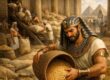
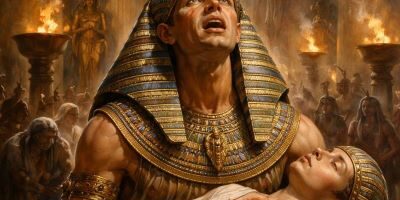
While one reads The Book of Exodus, the Ten Plagues each has unique meanings. The last three were mentioned in this Shabbat Torah portion. Locusts eat up all the crops and our brethren stored crops prior to this plague (similarity to Joseph, which the Pharaoh, Ramses II forgot what Joseph did for the Egyptians). Darkness was the next plague. Why darkness? The Egyptians had many deities, the sun and moon were powerful deities. G-d took away their sun and moon! The darkness was so thick that the Egyptians could not see or move. Did you ever wonder where all the items to make the Tabernacle came from? The Israelites were able to wander throughout the Egyptians’ homes and view all their possessions because they had an inner light. Thus, after 400 years the Israelites received what was owed to them for all the slavery and abuse they withstood. Lastly, the “Death of the Firstborn”. Isn’t the Pharaoh Firstborn? Many theories come from our sages, however Rashi stated that G-d allowed the Pharaoh to live and witness the dividing of the Red Sea, the death of his warriors, and to show that G-d had providence and divine supremacy over Amon-Ra (Egyptians’ Holiest deity), and that the Pharaoh was NOT A Deity!
I pray you reread The Book of Exodus and then the Haggadah to comprehend the “Why” Jews read the story every year to their children.
Shabbat Shalom,
Rabbi Helene Ainbinder