From The Rabbi’s Study…Shabbat, November 21, 22, 2025/1, 2 Kislev 5786
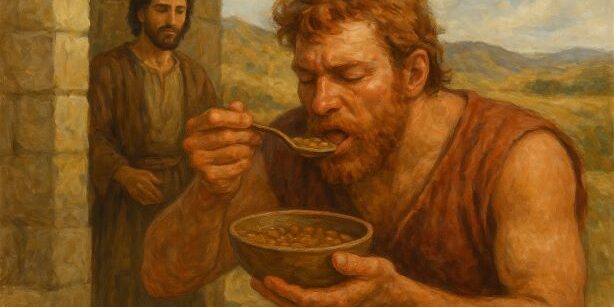
The Torah continues with Isaac praying for the barren Rebekah, who gives birth to Esau and Jacob. Esau grows up to be a hunter, and Jacob, an upright dweller in tents. Esau the elder, sells his birthright to Jacob for a pot of lentil soup. Rebekah, who favors her younger son Jacob, arranges for Jacob to secure his father’s coveted blessing instead of Esau. Jacob disguises himself as his brother Esau and is able to secure his father Isaac’s blessing. Isaac bids Jacob to marry one of his uncle Laban’s daughters.
Judaism Concepts and Values:
Sibling Rivalry, Parental Favoritism, and Intermarriage.
Mitzvot: Family Blessings
While the Torah points out the many challenges of raising children, it enlightens us to not show favoritism toward one child over the other children. Sibling rivalry between Esau and Jacob started in the womb. For many Jewish commentators, Esau and Jacob were more than brothers; they were two different nations at war with each other.
The Torah portion takes us into the home of Rebekah and Isaac. One may view the complicated family matters that may have led to Rebekah’s favoring and loving Jacob more than Esau; both sons had different personalities. Many questions come into mind:
What does it mean, Jacob dwelled in tents? Jacob was studying and working alongside his people. Esau was a hunter and did not care for studying or dwelling among his people. Isaac preferred Esau “because he had a taste for freshly killed game”, which Esau brought to him. The Biblical commentators agree that both sons had very different personalities; there are some who suggest that the distrust and hatred which developed between them was the fault of the parents. Psychologist Chaim G. Ginott points out that the competition and jealousy between them was sparked by parental favoritism and preferential treatment. Good parenting includes fair treatment of siblings.
The Haftarah is of the Prophet Malachi who was the last of the prophets. Very little is known about him, except that which we glean from his prophecies. He spoke about the year 450 B.C.E., when the Second Temple was rebuilt. At that time in Israel the people began to have doubts about G-d, and Malachi in his message affirms the divine election of Israel. Malachai gives eternal expression to the brotherhood of man: “Have we not one father? Has not one G-d created us? Why do we deal every person treacherously against his brother?” (Malachi 2:10).
Both the Torah and the Haftarah portions are connected with the theme of difference in treatment, whether it was Esau and Jacob or the two nations that descend from Esau and Jacob. The descendants of Esau were the Edomites who were fierce and cruel. Also, Esau was not worthy of his birthright, because of his unruly behavior and not following Judaic ways. Meanwhile, Jacob showed a reverential awe of one of the first essentials for one who is a part of the Jewish priesthood.
I always love reading the Torah because each time I read the chapters and verses I glean more insight of our Patriarchs and Matriarchs. They had health issues, family issues, hardships, and more, which makes them more human.
Each of us, as days and years pass, can relate to these remarkable ancestors that had a strong belief in G-d, and each day overcame their issues.
A Talmudic story…If G-d tells you to put all your troubles in a bag and place your bag on the shelf where everyone else’s is and He gives you the choice to pick a bag, you will quickly grab your bag back. G-d knows each of us, He gives us challenges, and He watches how we deal with them!
May everyone have a blessed Sabbath.
May those that are ill have rufuah shelaymah/a speedy recovery. Please know I recite misherbrot for your return to wellness.
Shabbat Shalom,
Rabbi Helene Ainbinder